Signs your daughter is about to start her period: A guide for parents
Understanding early changes, symptoms, & when girls typically get their first period
If your daughter is approaching puberty, you may already be noticing small but significant changes:new discharge, emotional shifts, or a sudden growth spurt. These are some of the earliest signs that your daughter is about to start her period, and for many parents and guardians, they come with questions: Is this normal? When do girls get their period? What should I prepare her for?
Talking about periods early in a calm, matter-of-fact way is one of the most powerful tools you have in breaking down period stigma before it takes root. Research shows that silence and secrecy around menstruation teach kids that their bodies are something to hide.
Open conversations send the opposite message: that periods are natural, healthy, and nothing to be embarrassed about. Normalizing these discussions now helps your child build lifelong confidence in her body and makes it much easier for her to come to you with questions later on.
This guide covers everything you need to know: from early period symptoms, to what the first menstrual period (menarche) typically looks like, how to support her emotionally, and when irregular cycles are normal or abnormal.
What is menarche?
Menarche is a child’s first menstrual period, marking the body’s readiness to begin ovulation. It’s one milestone within a longer puberty journey that also includes breast development, growth spurts, and hormonal changes.
While everyone’s timeline is unique, menarche is a natural part of growing up. Understanding the signs helps you support her with confidence.
What are the symptoms of menarche? Symptoms of menarche include new vaginal discharge, breast development, mild cramping, acne, lower-back aches, mood swings, pubic hair growth, and growth spurts. These physical and emotional changes signal that a girl’s first menstrual period is approaching.
Common signs your daughter is about to start her period
Menarche rarely arrives without warning. Most teens or pre-teens experience a series of physical and emotional changes that signal the first period is approaching. These changes can start 6–18 months before the first menstrual bleed. 1
1. Physical signs
These are the clearest signs your daughter is about to start her period:
- Breast development (usually the earliest sign of puberty)
- Vaginal discharge that is white or yellowish; often begins months before the first period
- Rapid height growth
- Growth of pubic and underarm hair
- Mild abdominal cramping
- Low back aches
- Acne or oilier skin
Vaginal discharge is one of the strongest indicators of approaching menarche. Many girls start their period within about a year of noticing it. 1

2. Emotional and behavioral signs
Hormonal changes often bring emotional shifts as well:
- Mood swings
- Irritability or increased sensitivity
- Desire for privacy or independence
- Social changes or new self-awareness
Taken together, these physical and emotional changes form a picture of the body preparing for its first menstrual cycle. It’s important to note that these changes may be felt more intensely for children with existing diagnosed mental health conditions. If needed, work with a licensed mental health specialist to develop tactics to cope.
When do girls get their period?
In the United States, the most common age for a first menstrual period is around 12, though anything between 9 and 15 years old falls within the healthy, normal range. Large national cohort data also shows that the timing of menarche has shifted over generations. In a study of more than 71,000 individuals, the average age dropped from 12.5 to 11.9 years among those born between 1950 and 2005. 2
Research suggests that these shifts are influenced by a combination of biological, nutritional, and environmental factors, and similar trends have been documented across many populations worldwide. These influences help explain why the age of a first period can vary so widely from child to child. 3
What this means for parents:
- Your daughter may start earlier than you did
- Early periods are more common today than in past generations
- A wide range of timing is completely healthy
Early menarche is not unusual. Rates of first periods occurring before age 11 have nearly doubled over recent decades. Doctors link this change to genetics, body composition, nutrition, environmental exposures, and psychosocial stress. Still, most importantly, variation is normal and doesn’t necessarily indicate that anything is wrong.
What triggers the first period?
Menarche begins when the brain and ovaries mature enough to coordinate ovulation. Influencing factors include: 2
- Genetics
- Body composition (BMI accounts for ~46% of the trend toward earlier menarche)
- Environmental exposures
- Nutrition and stress
Your daughter’s body follows its own timeline and it may differ from yours.
What to tell your daughter before her first period
Talking about periods early and often creates comfort. You don’t need a rehearsed speech; small, gentle conversations over time are best.
1. Normalize what’s happening
Let her know that a period is a normal, healthy part of growing up. If your daughter is concerned about being ahead of or behind her peers, remind her that everyone develops at their own pace.
Keep your conversations short, calm, and open‐ended. You can begin with casual comments like: “You might notice some changes with your body. If you have questions, I’m here” or “every body is different, so there’s nothing to worry about.”
When the day comes, react calmly and positively. A light “This is totally normal. Let’s get you set up” can shape her lifelong relationship with her period. Also, keep in mind that mood swings or sensitivity are normal around menarche. Your daughter’s shifting hormones can make small things feel extreme. Remind her (and yourself!) that this is biology at play: validate her emotions and know that things will get easier over time.
2. Explain what a period is and what menstrual blood looks like
While many schools provide resources about first periods and changes during puberty, this curriculum isn’t always high-quality. And many states do not include this education at all. It’s a good idea to reinforce any information she learns at school or from friends with a casual conversation at home to explain what a period is, why it happens, and what to expect.
Keep explanations fairly simple, especially at younger ages. For example, “Each month, the uterus builds a soft lining to prepare for a possible pregnancy. If the body doesn’t need it, the lining breaks down and leaves the body. That’s your period.”
Some young teens picture their first period like a scene out of a horror movie withtons of bright red blood that they’ll need to rush to manage. Reassure her that the first period may actually look much different from this, and could just be:
- Light spotting
- Bright red, light pink, or even brown spots of blood
- A slow start-and-stop flow
Brown blood is simply older, oxidized blood and totally normal.
3. Address discomfort gently
Your daughter may already know that periods can be uncomfortable. It’s helpful to set those expectations not just based on your own experiences if you have (or had) a period yourself but to note that her symptoms might vary from other people she knows, and may change between cycles, and over her lifetime..
Some common early symptoms to talk about include:
- Cramps, which can be felt not just in the lower belly, but also in the low back, butt, stomach, or even in the legs
- Headaches or migraines
- Low back pain
- Fatigue
- Bloating
- Hormonal acne
Comfort strategies include heating pads, warm baths, tea, hydration, and rest. Some gentle exercise can help, too.
4. Introduce menstrual product options & build a period preparedness kit
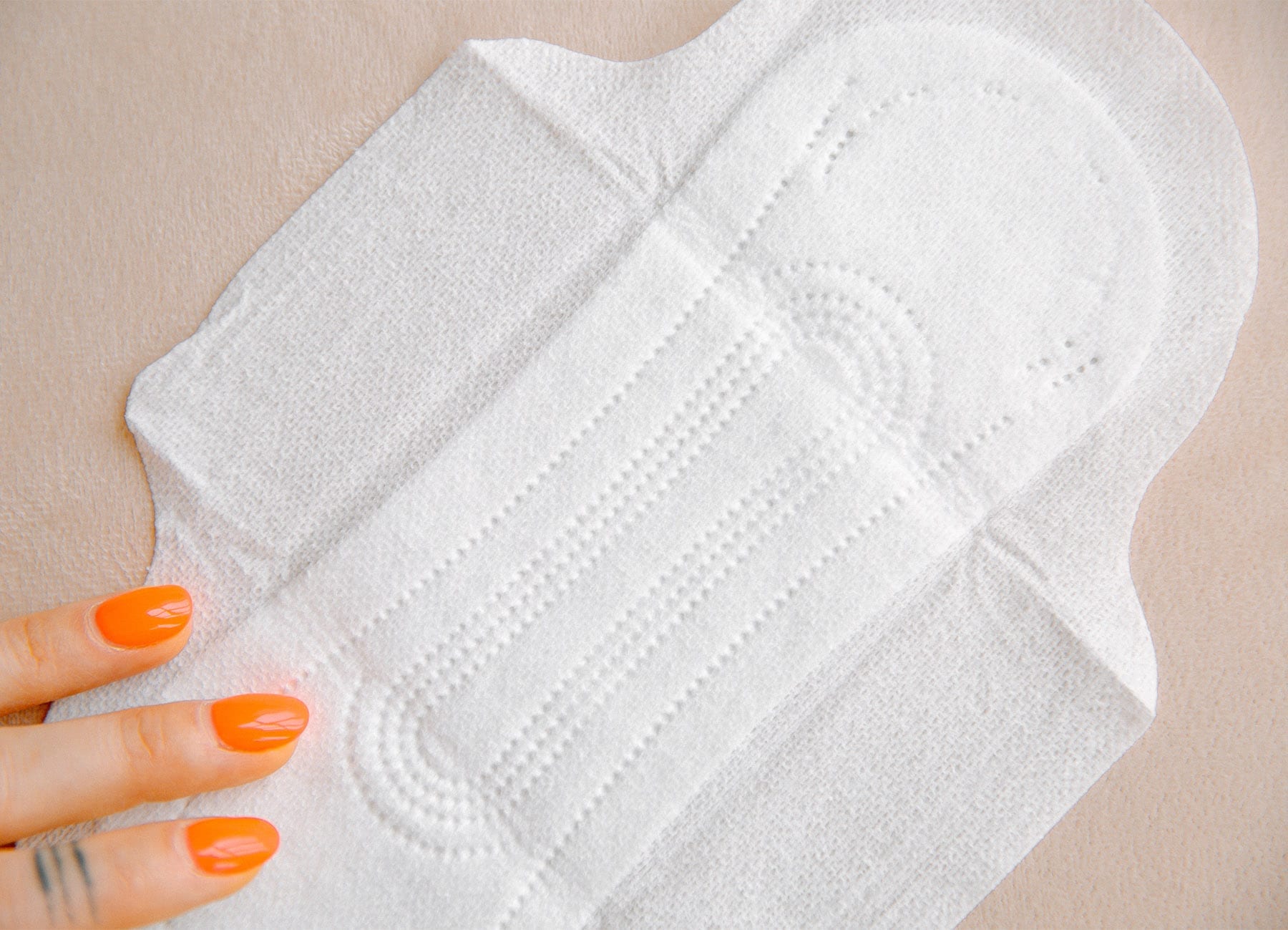
Start simple: For younger menstruators, products like pads and period underwear are easy to use and may be less likely to leak. Pack a few items for a ‘first period kit’ to keep in a backpack or school locker so she’s ready at any time. These could include:
- Comfortable, hypoallergenic period pads, like Flex Ultra Thin Pads
- Period underwear
- Body-safe wipes (make sure they’re safe for intimate areas, like Flex Wipes)
- A small resealable bag for soiled clothing
- Spare underwear and / or pants (just in case)
Over time as comfort level grows, options to explore include:
- Menstrual cups, like Flex Cup (which features an easy-to-use patented pull-tab)
- Menstrual discs, like Flex Disc
- Tampons (but ensure they are made with body-safe ingredients and are the correct size for younger menstruators)

5. Prepare her for irregular cycles
Many girls do not have regular monthly cycles right away. A large U.S. cohort study found that fewer girls achieve cycle regularity within the first two years after menarche, and more take three years or longer. 2
Help get her set up with an app or a simple calendar to track her periods and symptoms. This makes it easier to keep tabs on menstrual cycles and start to build awareness of when symptoms may start, what to expect, and what might be out of the ordinary.
When to see a pediatrician or gynecologist
Most menstrual differences are normal, but schedule a visit if: 4
- She hasn’t had a first period by age 15
- Breast development began more than three years ago
- Periods are extremely heavy (soaking through a pad every 1–2 hours)
- Bleeding lasts more than 10 days
- There are several months without bleeding after the first period
- Menarche occurs before age 8
- Pain is severe enough that it interferes with school or activity attendance
A clinician can evaluate whether further guidance is needed.
What’s normal for cycles after a first period
After the first menstrual period, it’s extremely common for cycles to be irregular. Typical patterns can look like:
- Cycles ranging from 21 to 45 days
- Start /stop bleeding
- Occasional skipped cycles
- Varying flow levels
In the JAMA Women’s Health Study, an increasing number of girls reported taking three or more years to reach regularity, with some not yet regular even later. 2 So, it’s totally okay if your daughter’s periods come early or late: don’t expect a perfectly predictable cycle right away.
Helping your daughter feel empowered instead of anxious
With your support, her first period can be a moment of confidence rather than confusion. Here’s how you can help:
- Keep communication open
- Offer reliable, body-safe products
- Normalize all emotions
- Encourage questions
- Provide privacy as she learns
- Celebrate her growth without making it overwhelming
As a parent, you’re shaping how she feels about her body. A calm, informed approach is one of the greatest gifts you can give her during this transition.
This article is informational only and is not offered as medical advice. It does not substitute a consultation with your physician. Please consult your physician if you have any gynecological/medical concerns or conditions.
© 2026 The Flex Company. All Rights Reserved.
- Children’s Hospital of Orange County (CHOC). (n.d.). A parent’s ultimate guide to periods. https://health.choc.org/a-parents-ultimate-guide-to-periods/[↩][↩]
- Wang, Z., Asokan, G., Onnela, J., Baird, D. D., Jukic, A. M. Z., Wilcox, A. J., Curry, C. L., Fischer-Colbrie, T., Williams, M. A., Hauser, R., Coull, B. A., & Mahalingaiah, S. (2024). Menarche and time to cycle regularity among individuals born between 1950 and 2005 in the US. JAMA Network Open, 7(5), e2412854. https://doi.org/10.1001/jamanetworkopen.2024.12854[↩][↩][↩][↩]
- Peters, S. A. E., Huxley, R. R., & Woodward, M. (2018). Long-term health outcomes associated with early menarche in women: A systematic review. Human Reproduction Update, 24(5), 586–594. https://doi.org/10.1093/humupd/dmy020[↩]
- American College of Obstetricians and Gynecologists. (2015). Menstruation in girls and adolescents: Using the menstrual cycle as a vital sign (Committee Opinion No. 651). https://www.acog.org/clinical/clinical-guidance/committee-opinion/articles/2015/12/menstruation-in-girls-and-adolescents-using-the-menstrual-cycle-as-a-vital-sign[↩]